

Resilience — Summit Paper
Continuity, not simply recovery: a practical framework for keeping essential public outcomes working when normal systems fail.
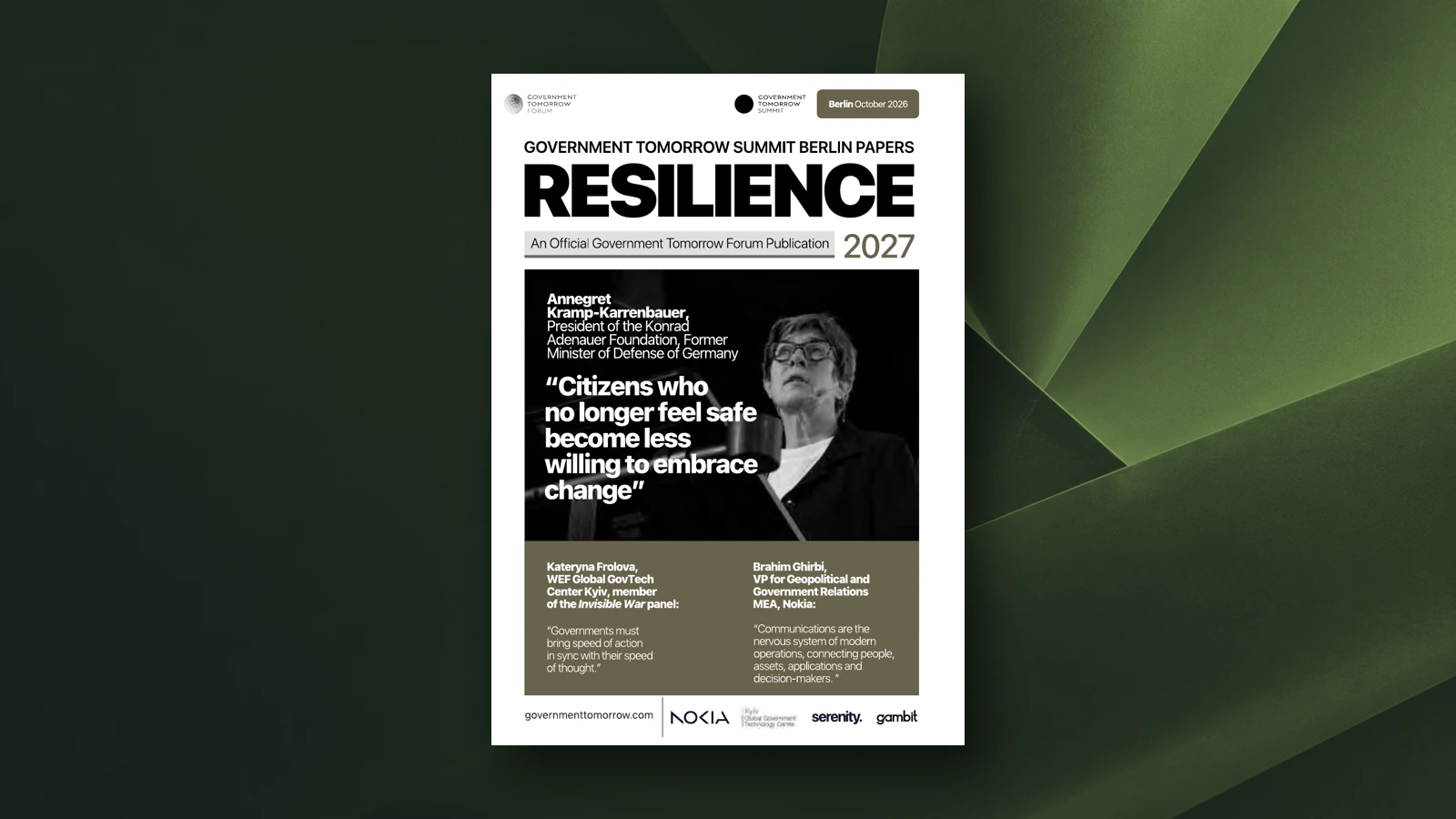
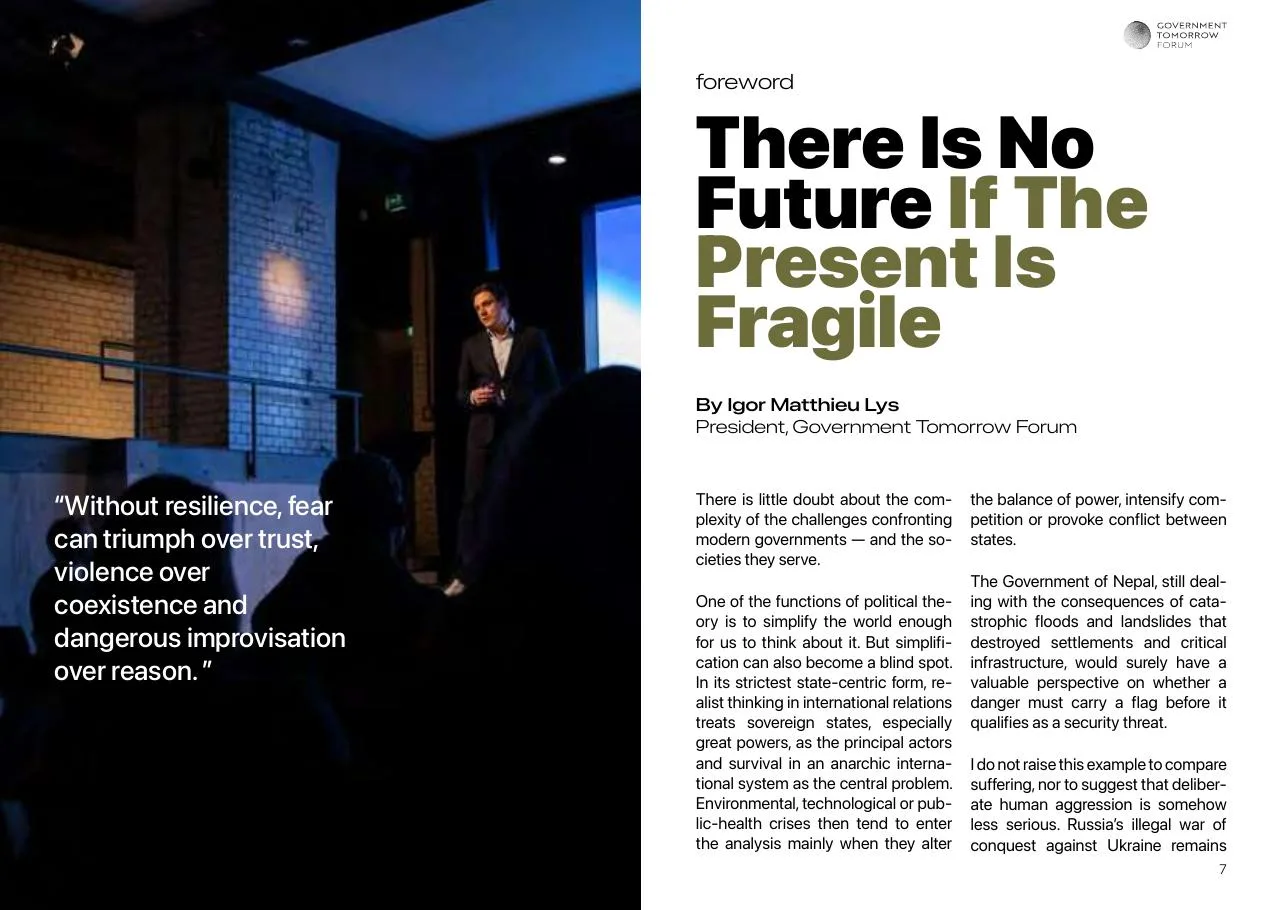
There is no future if the present is fragile
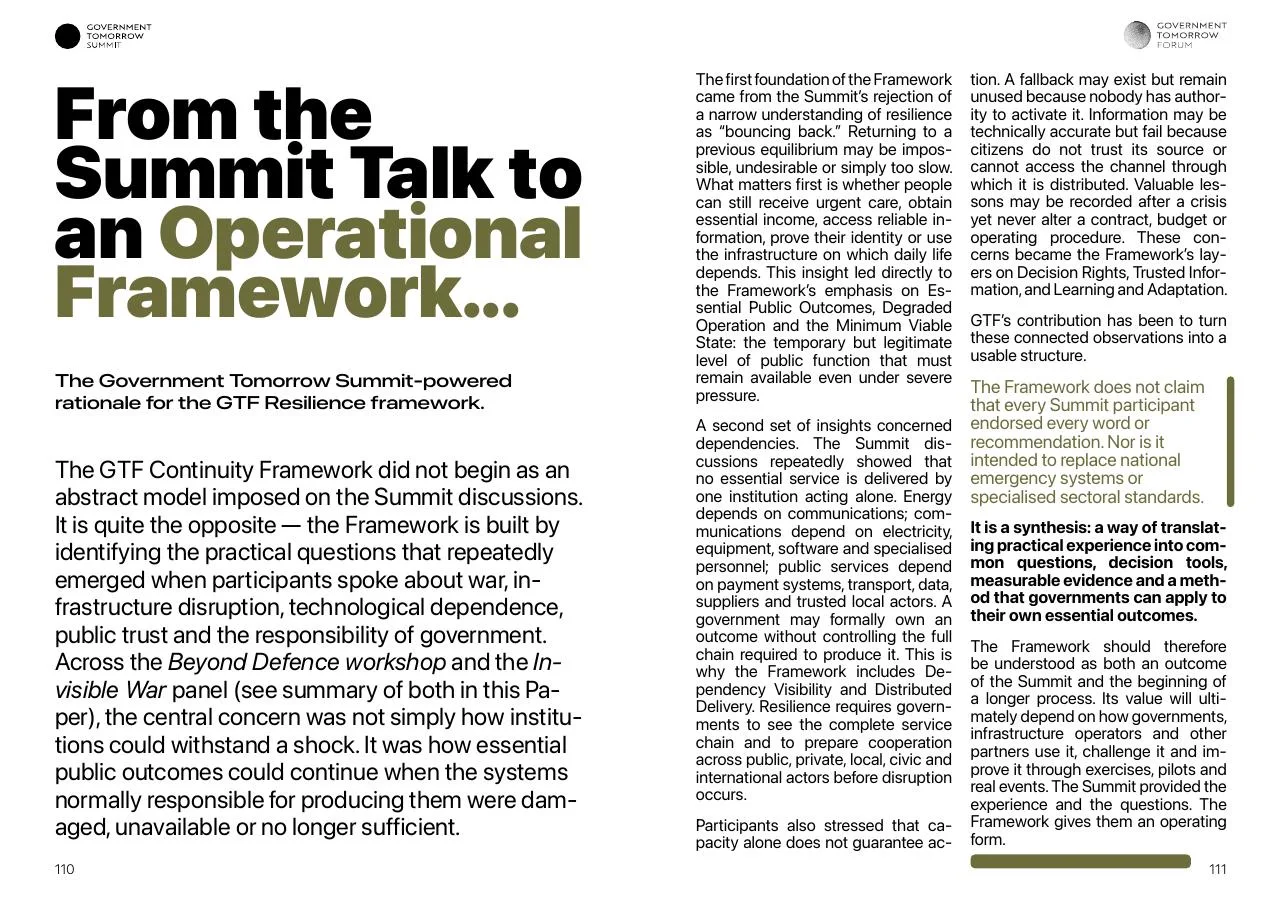
Resilience is not only a defence question or a plan for recovery. This Government Tomorrow Summit Berlin paper explores how governments, societies and strategic enterprises keep essential outcomes functioning under disruption. It connects Annegret Kramp-Karrenbauer’s keynote, the “Beyond Defence” workshop, “The Invisible War” panel and the GTF Resilience Framework.
Seven key takeaways
1. Resilience means continuity
The central question is not simply how quickly a system recovers, but whether people can still obtain the essential support and services on which their lives depend.
2. Define the minimum viable State
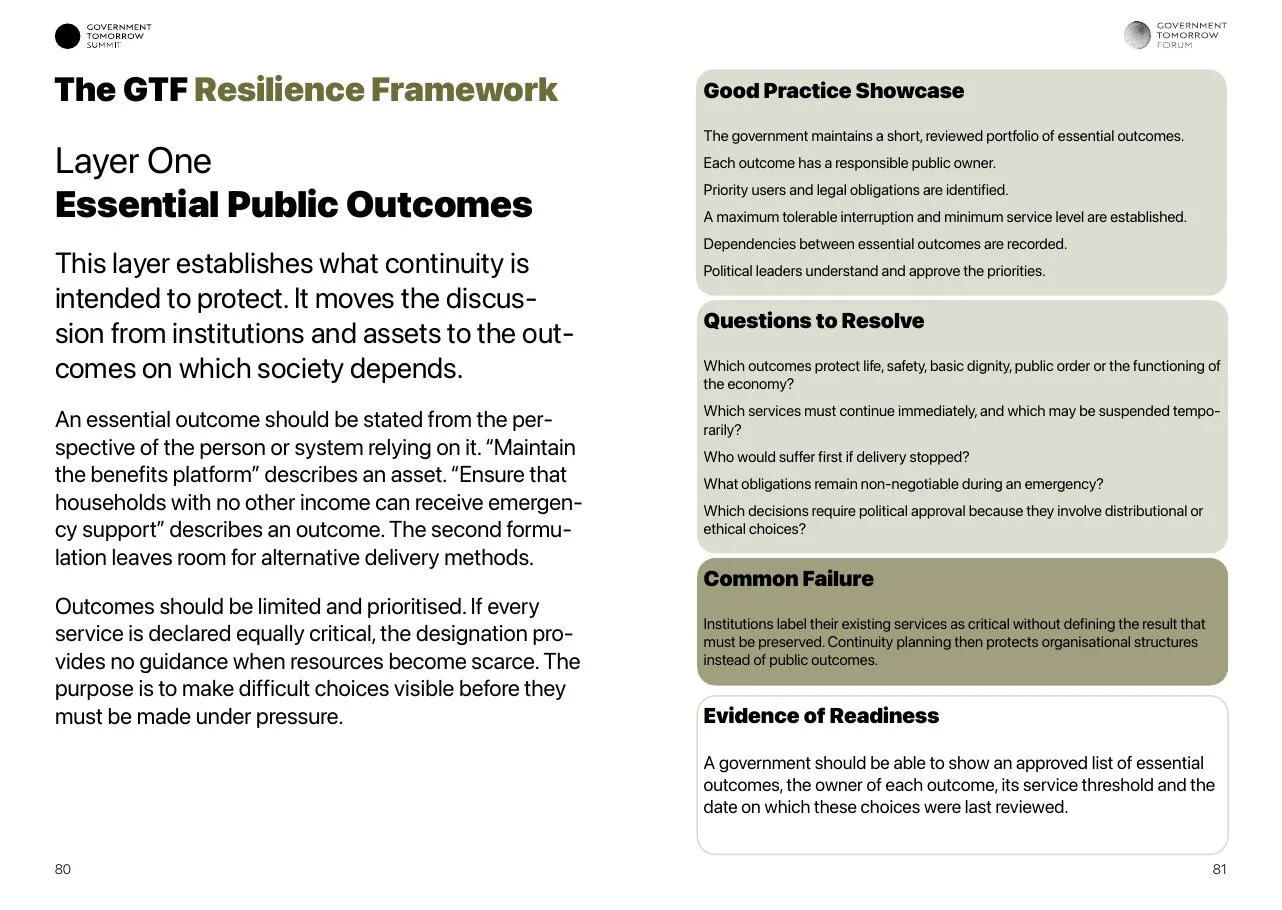
Identify the public outcomes that must continue, their priority users, minimum service levels and maximum tolerable interruptions. These choices need political agreement and named operational owners.
3. Protect outcomes, not just assets
A backup server cannot preserve a service by itself. Map the full delivery chain: staff, identity data, suppliers, payments, communications, local offices and dependencies shared with other services.
4. Design degraded operation before failure
Prepare usable alternatives when normal delivery is unavailable. Fallback processes need legal and security review, practical resources and realistic exercises involving the people expected to use them.
5. Assign authority before urgency
Specify decision rights, deputies, triggers and escalation routes in advance. Frontline actors need bounded authority to respond when ordinary approval channels no longer work.
6. Trust and relationships are operational infrastructure
Trusted information, cross-sector partnerships and human networks make continuity possible. Communication must reach people through accessible alternatives when digital channels fail.
7. Lessons count only when they change the system
Exercises and incidents must lead to corrective action with owners, deadlines and resources. Resilience grows when evidence changes budgets, contracts, procedures, training or behaviour.
Inside the paper
- There Is No Future If The Present Is Fragile: foreword by Igor Matthieu Lys.
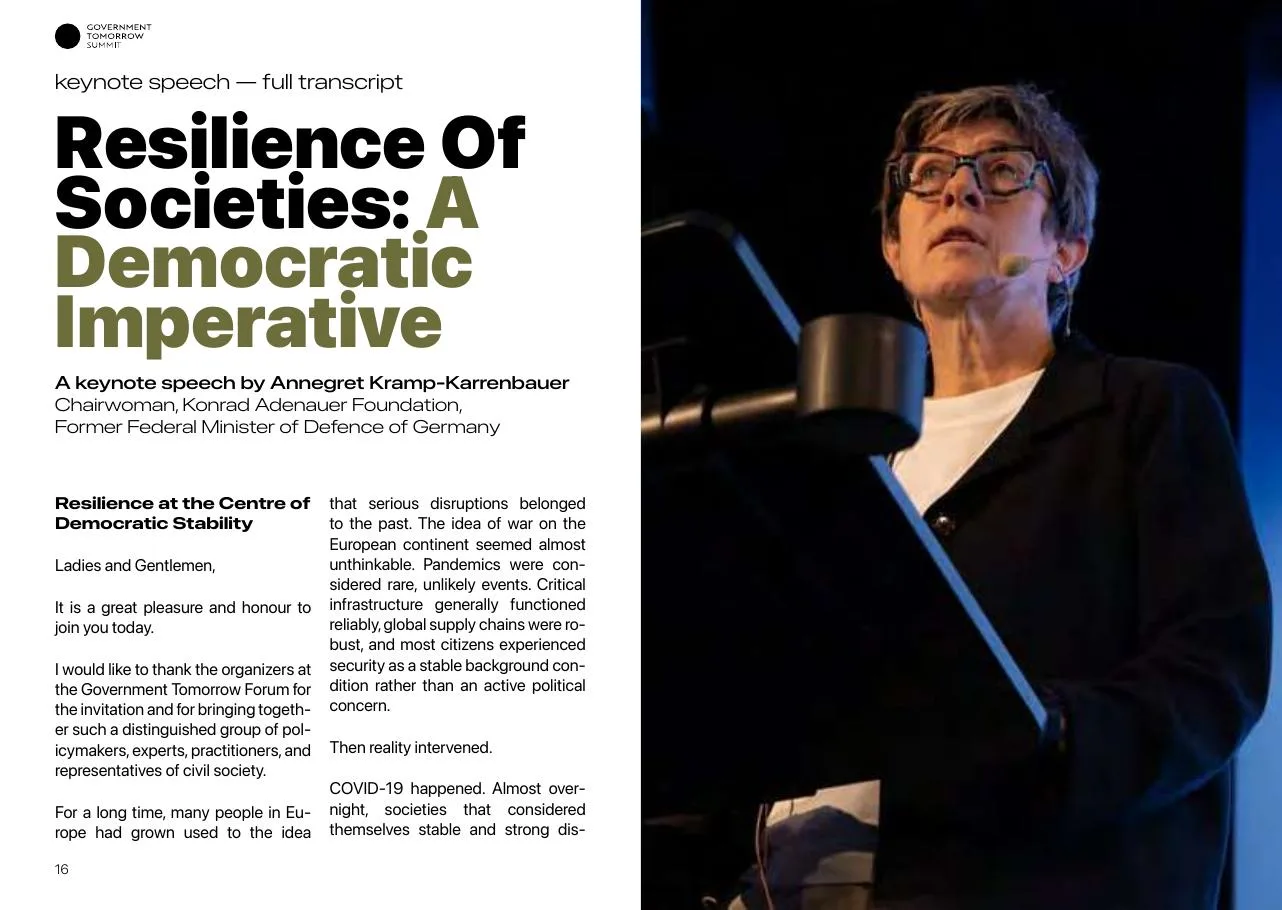
- Resilience of Societies — a Democratic Imperative: the full keynote transcript from Annegret Kramp-Karrenbauer.
- Beyond Defence: workshop synthesis and ideas to take back to government.
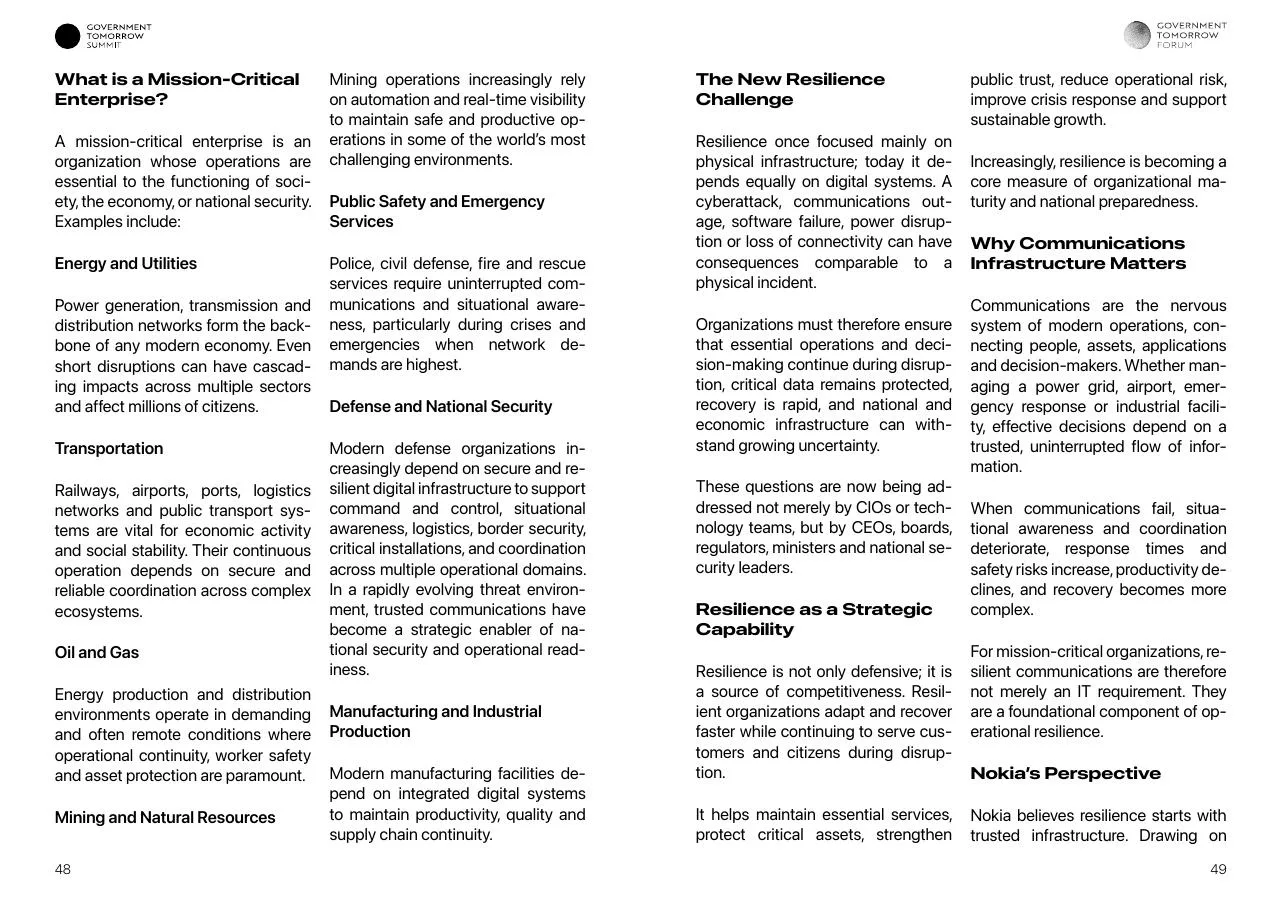
- Mission-Critical Enterprises and the Imperative of Resilience: guest contribution by Dr. Brahim Ghirbi.
- The Invisible War: panel insights on threats, coordination and preparedness.
- Urban diplomacy: an interview with Edward Mermelstein.
- The GTF Resilience Framework: methodology, an analytical canvas and a readiness diagnostic.
A framework you can put to work
The paper sets out seven connected layers: essential public outcomes, dependency visibility, degraded operation, decision rights, distributed delivery, trusted information, and learning and adaptation. They operate as a chain: strength in one layer cannot compensate for a critical gap in another.
The Minimum Viable State Canvas turns these questions into an outcome-by-outcome assessment. The Continuity Readiness Diagnostic distinguishes unknown, documented, operational and tested capabilities. Its central caution is to avoid averaging away a critical weakness: a high overall score cannot replace a missing owner or an unusable fallback.
A worked example examines emergency income support during a national connectivity failure, showing how all seven layers need to cooperate to protect one public outcome.
For institutions responsible for continuity
For national and local governments, emergency planners, public-service owners, infrastructure operators and strategic private partners who must keep society functioning under altered conditions.
Read Annegret Kramp-Karrenbauer’s keynote · Explore the Resilience pillar · Government Tomorrow Summit
Summary of the supplied 60-page paper from the October 2026 Berlin Summit. The original cover labels the publication 2027. Editorial team: Igor Lys, Paakhi Rajpal, Kartik Kapai, Archie Hood, Jake Kitchiner and Philip Borg.
Pages from the paper

Continue reading
 Publication
Annegret Kramp-Karrenbauer: “Citizens who no longer feel safe become less willing to embrace change”
Keynote on resilience delivered at the Government Tomorrow Summit 2026 in Berlin.
Berlin Publication
Beyond Defense: Building resilient systems for governments
Summit workshop paper on resilience beyond the military dimension.
Berlin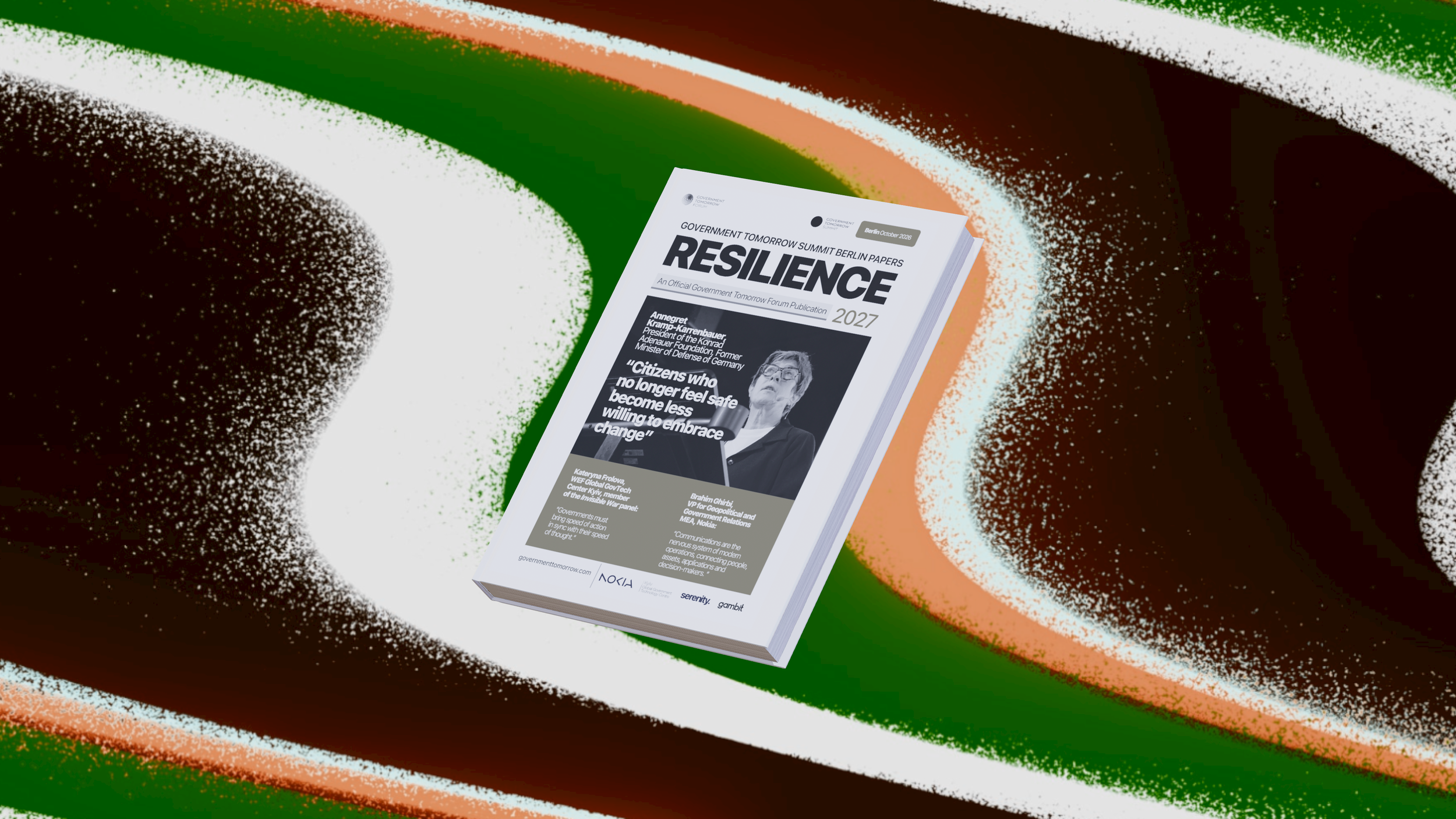 Publication
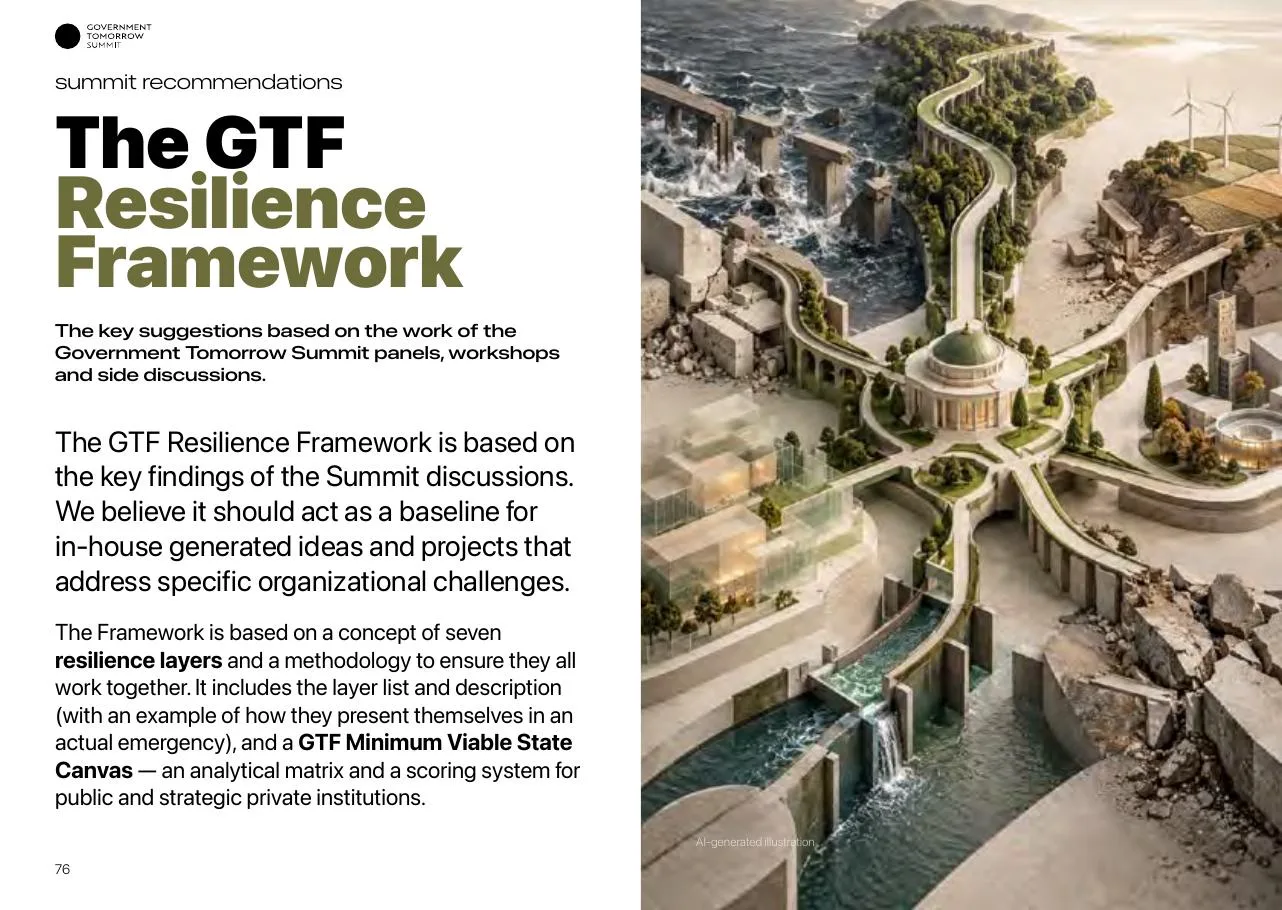
GTF Resilience Framework
Making sure your administration is ready and capable to ensure real continuity.