

State Capacity — Summit Paper
The power to turn political ambition into public results: institutional learning, digital statecraft and practical tools for better public services.
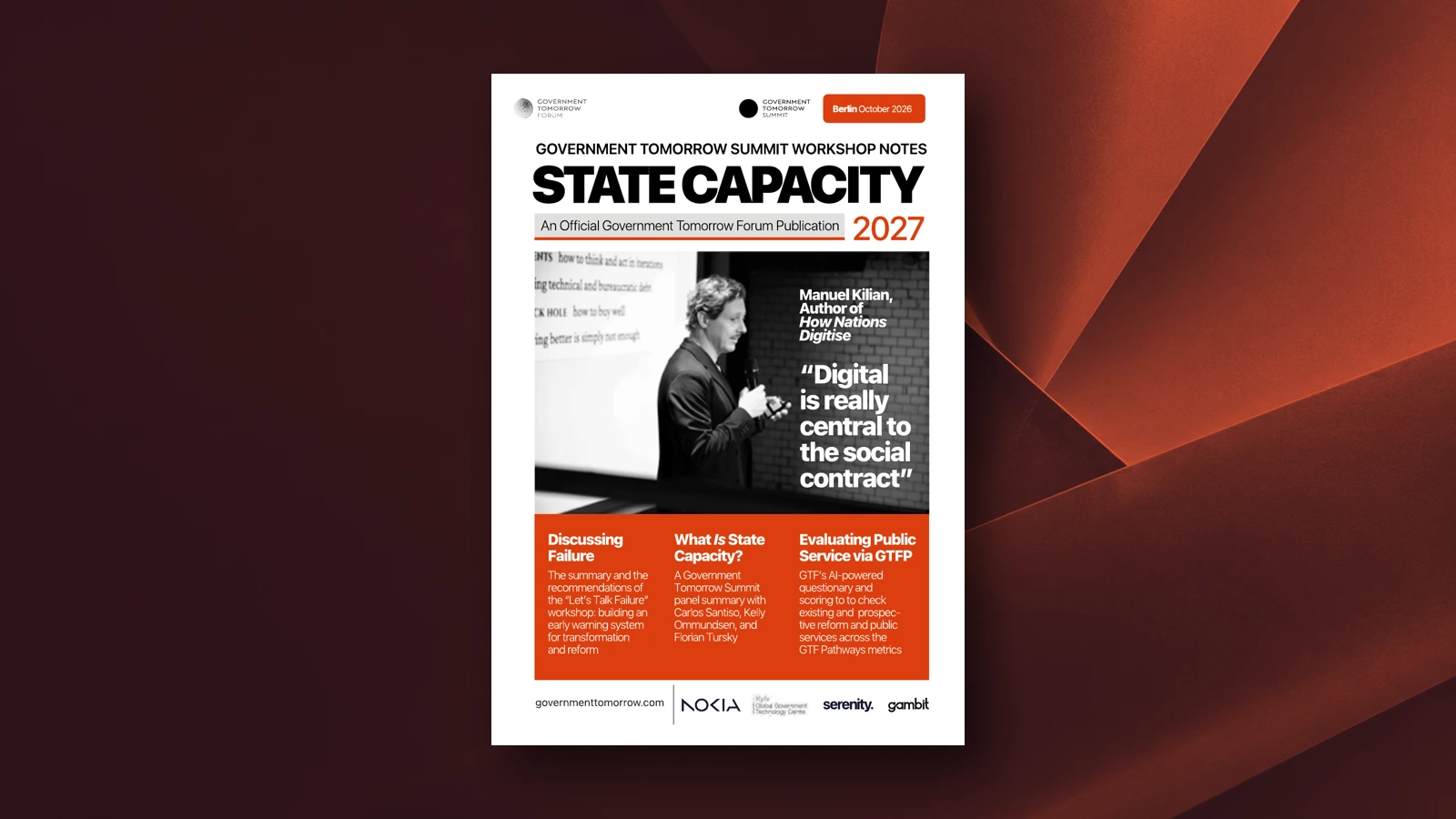
From political ambitions to public results
What makes a State capable? This Government Tomorrow Summit Berlin paper looks beyond the size of government or the sophistication of its technology to ask what institutions actually achieve for the people they serve. It brings together the “What Really Is State Capacity?” panel, the “Let’s Talk Failure” workshop, GTF Pathways and Manuel Kilian’s presentation of How Nations Digitise.
Seven key takeaways
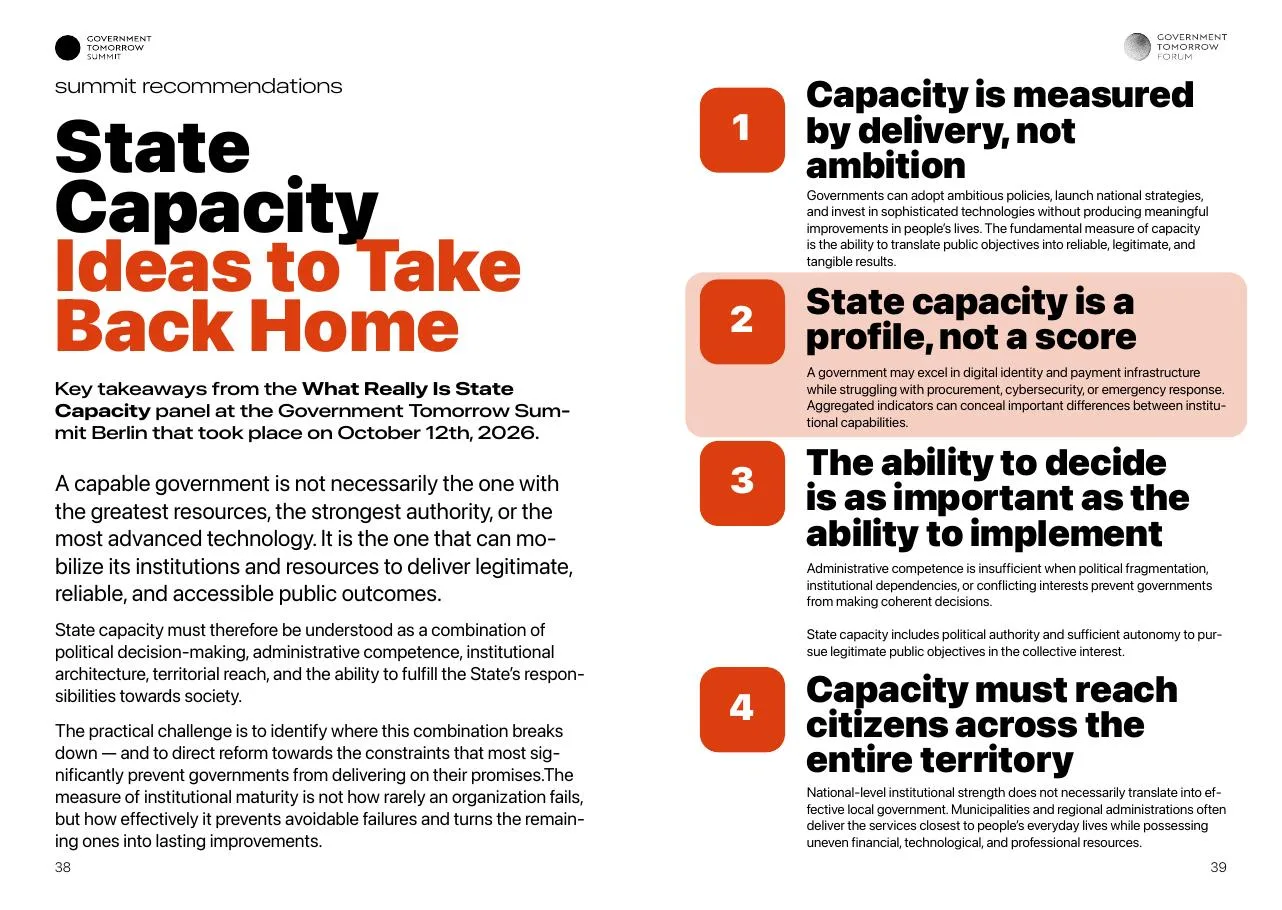
1. Capacity is what governments achieve with their power
Authority, budgets and institutions matter only when they translate into public results. Start with the outcome a service or reform should produce, rather than the machinery used to deliver it.
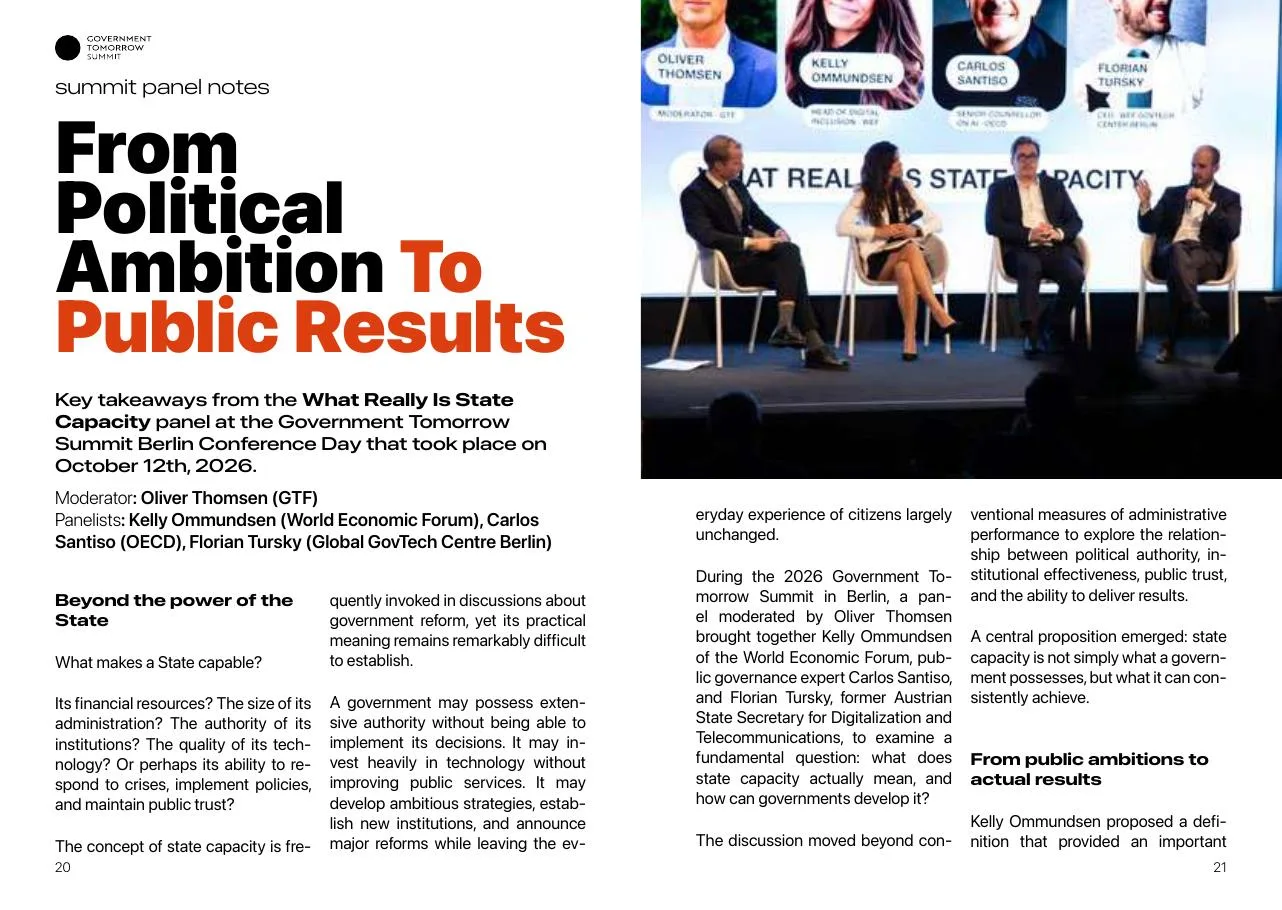
2. There is no single measure of a capable State
State capacity is a profile, not a universal ranking. Legal systems, administrative traditions and social expectations differ; useful comparisons identify specific capabilities and the conditions behind them.
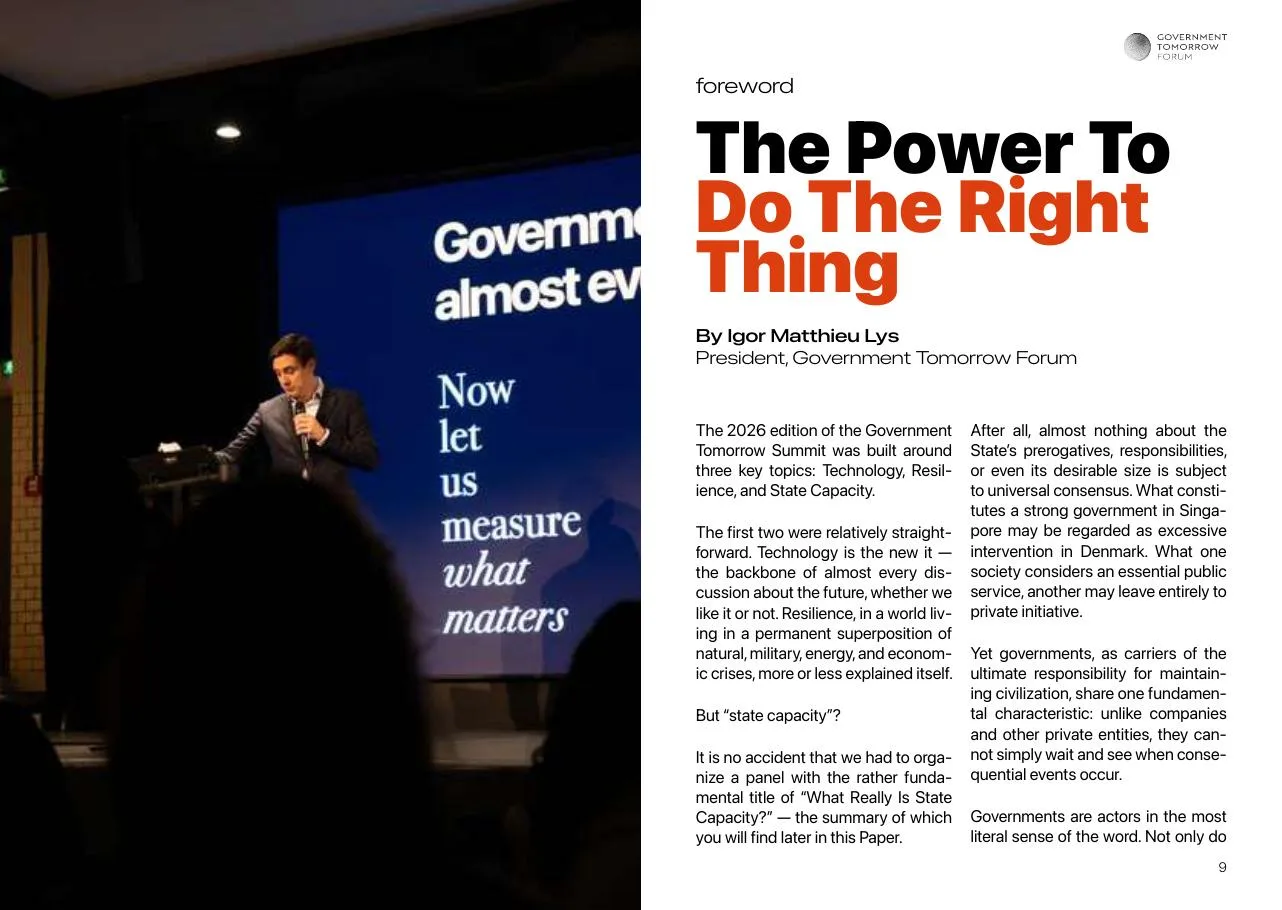
3. Digital transformation is a discipline of statecraft
Technology changes the social contract. Political commitment, lasting institutional ownership, internal capability, procurement reform and citizen adoption must work together; a platform launch is not evidence of successful transformation.
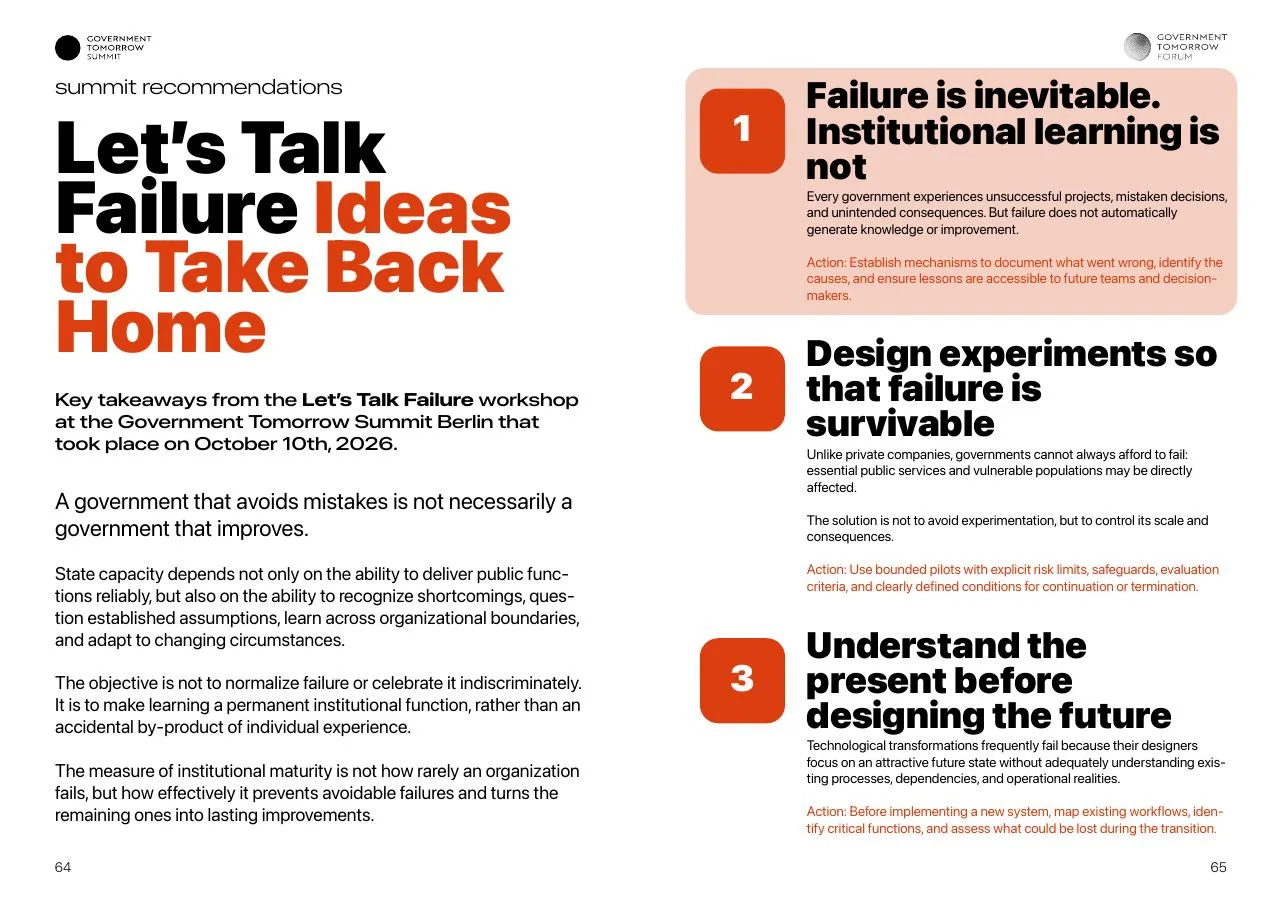
4. Avoiding failure is not the same as improving
A programme can meet its formal targets while failing to create public value. Bounded experimentation needs explicit risk limits, an accountable owner and a plan to preserve lessons even when a project ends.
5. Question procedures, not just their efficiency
Digitising an unnecessary requirement does not make it useful. Governments should examine why administrative rules exist, what they protect and whether simpler, legally sound alternatives can achieve the same purpose.
6. Innovation is not automatically progress
Evaluate what makes people’s lives better. GTF Pathways examines Technology, Human-Centricity and Prosperity through nine criteria, complemented by the Five-Point Test and a Service Passport that highlights findings and evidence gaps.
7. Knowledge must become lasting institutional improvement
Learning matters when it changes decisions, responsibilities and practice. Preserve institutional memory, identify early-warning signals and review whether recommendations influence later projects.
Inside the paper
- The Power To Do The Right Thing: Igor Matthieu Lys on the responsibility of governments to act.
- What Really Is State Capacity?: panel insights with Carlos Santiso, Kelly Ommundsen and Florian Tursky.
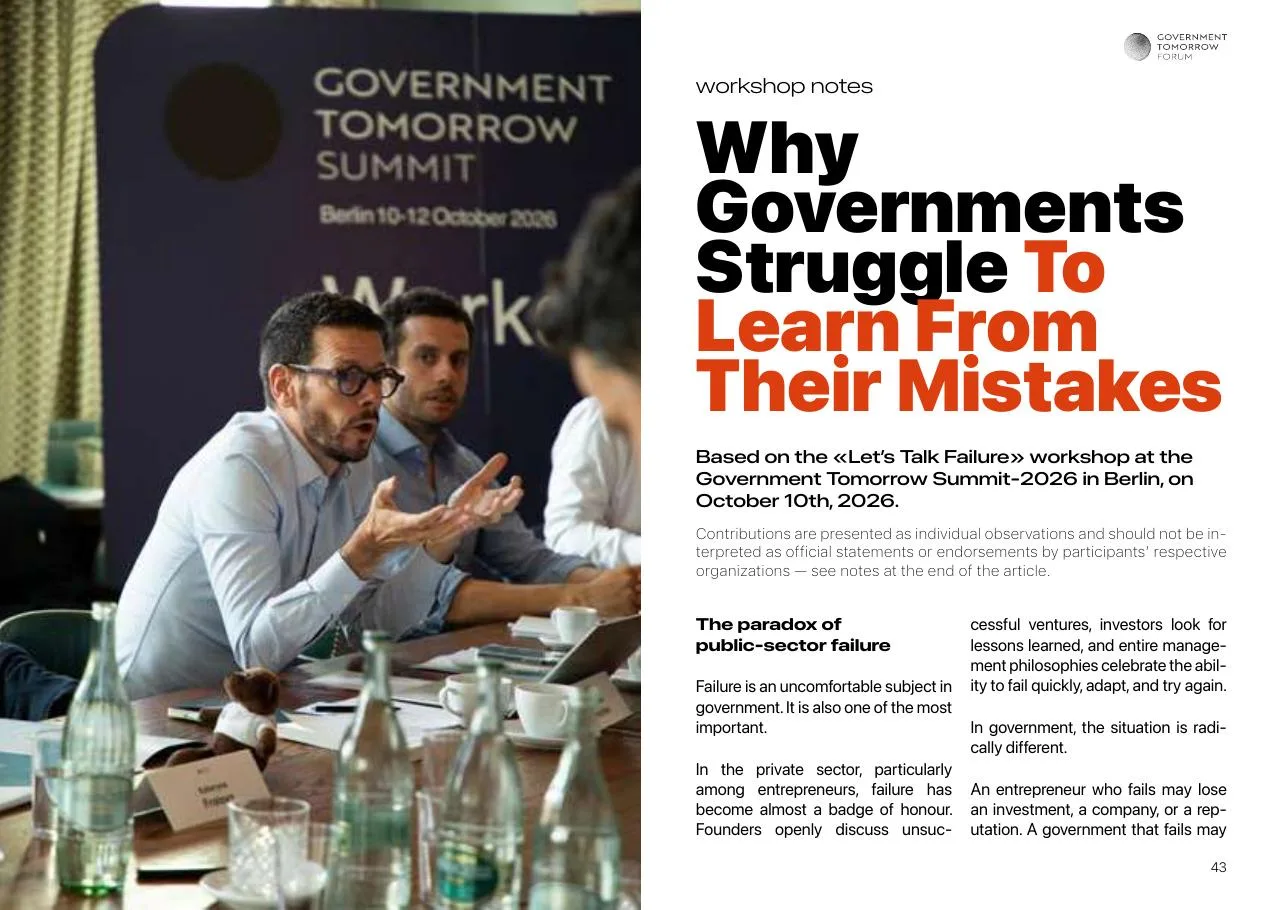
- Let’s Talk Failure: workshop findings, take-home ideas and participant methods for moving from failure to growth.
- Measuring What Really Matters: GTF Pathways and the evaluation of public services.
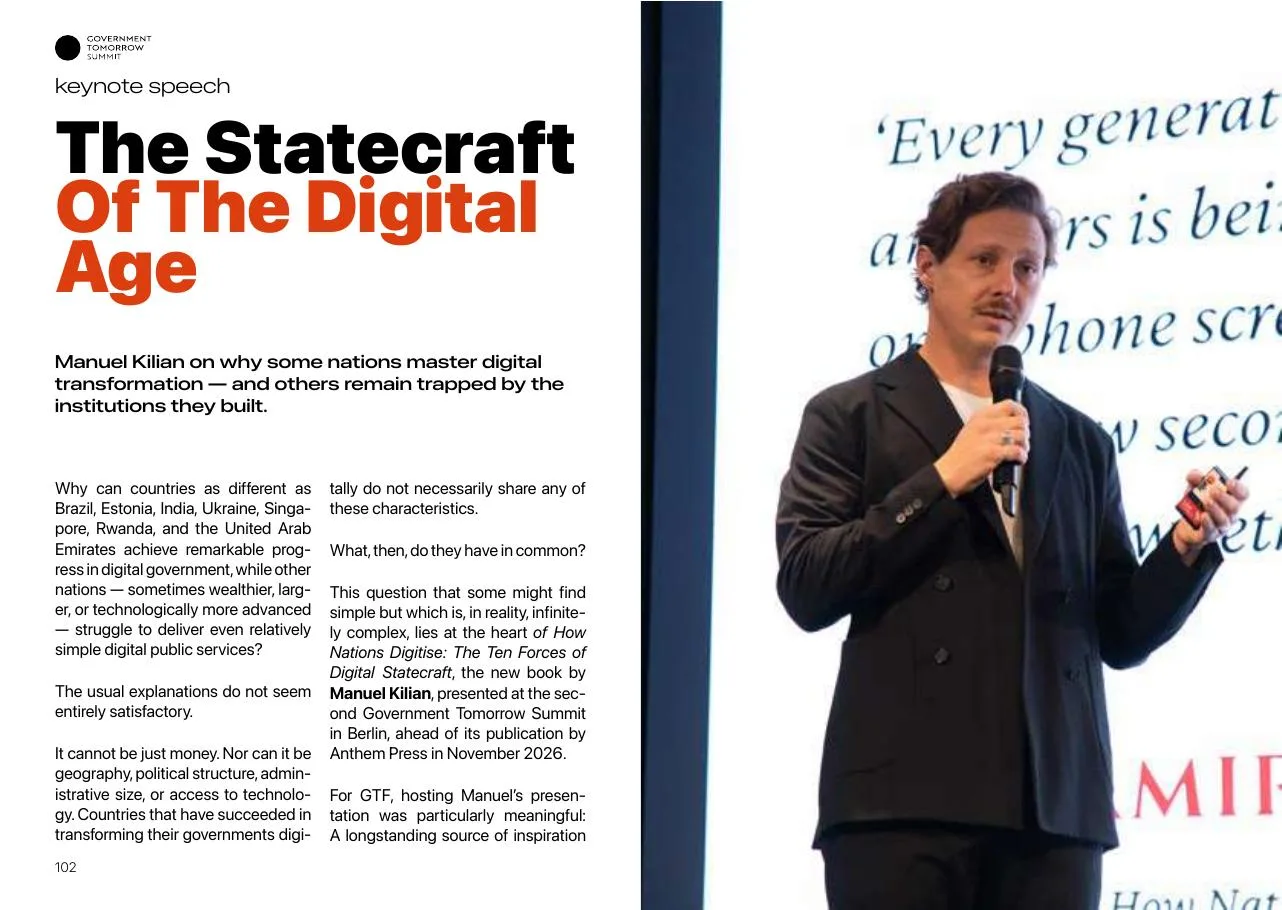
- The Statecraft of the Digital Age: Manuel Kilian on the foundations, capacity and execution of digital government.
Four practical starting points
These are proposed pilot projects, not claims of completed or independently validated programmes.
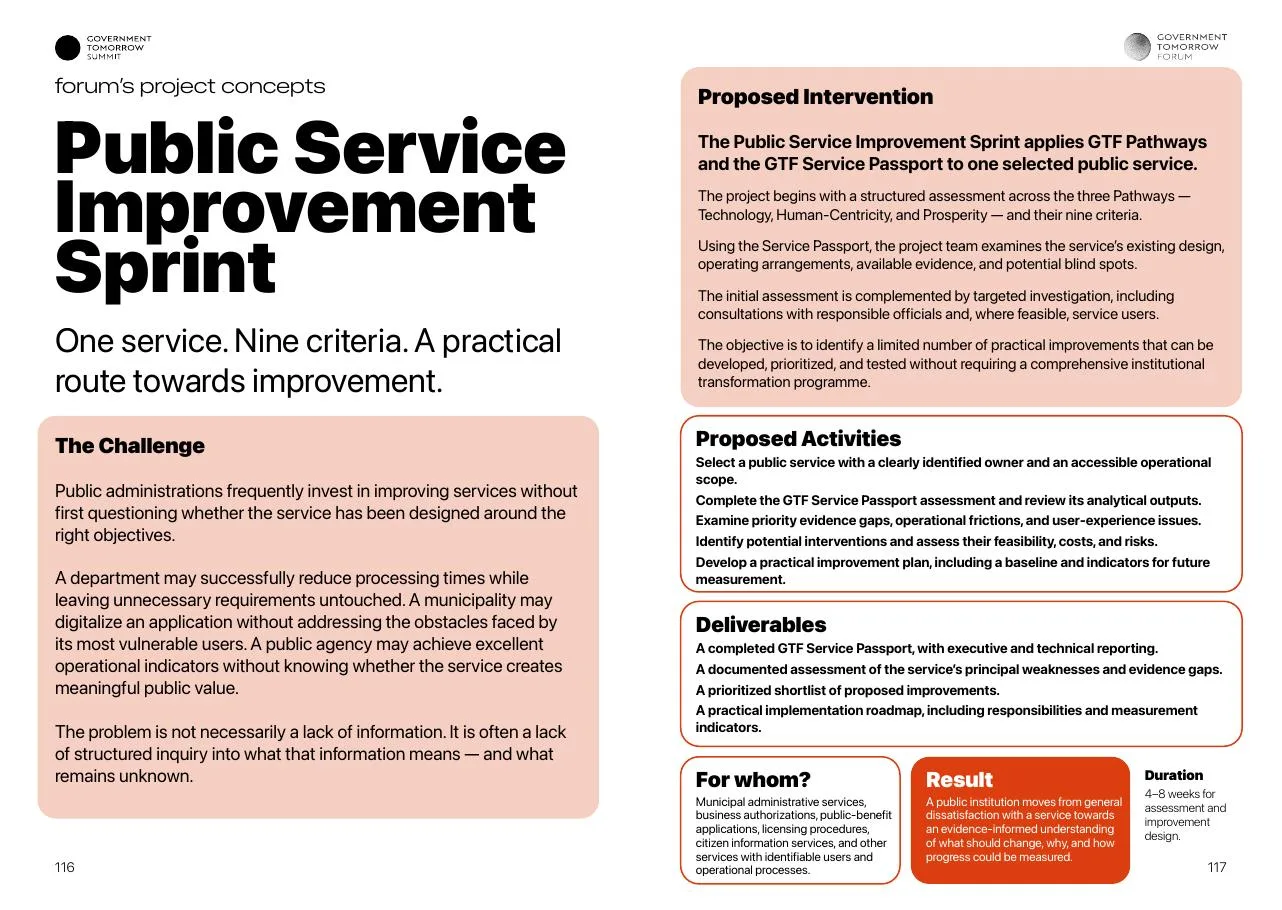
- Public Service Improvement Sprint: apply GTF Pathways and the Service Passport to one service, identify evidence gaps and prioritise feasible improvements.
- Government Service Observatory: assess a portfolio of services through a common methodology and establish periodic review.
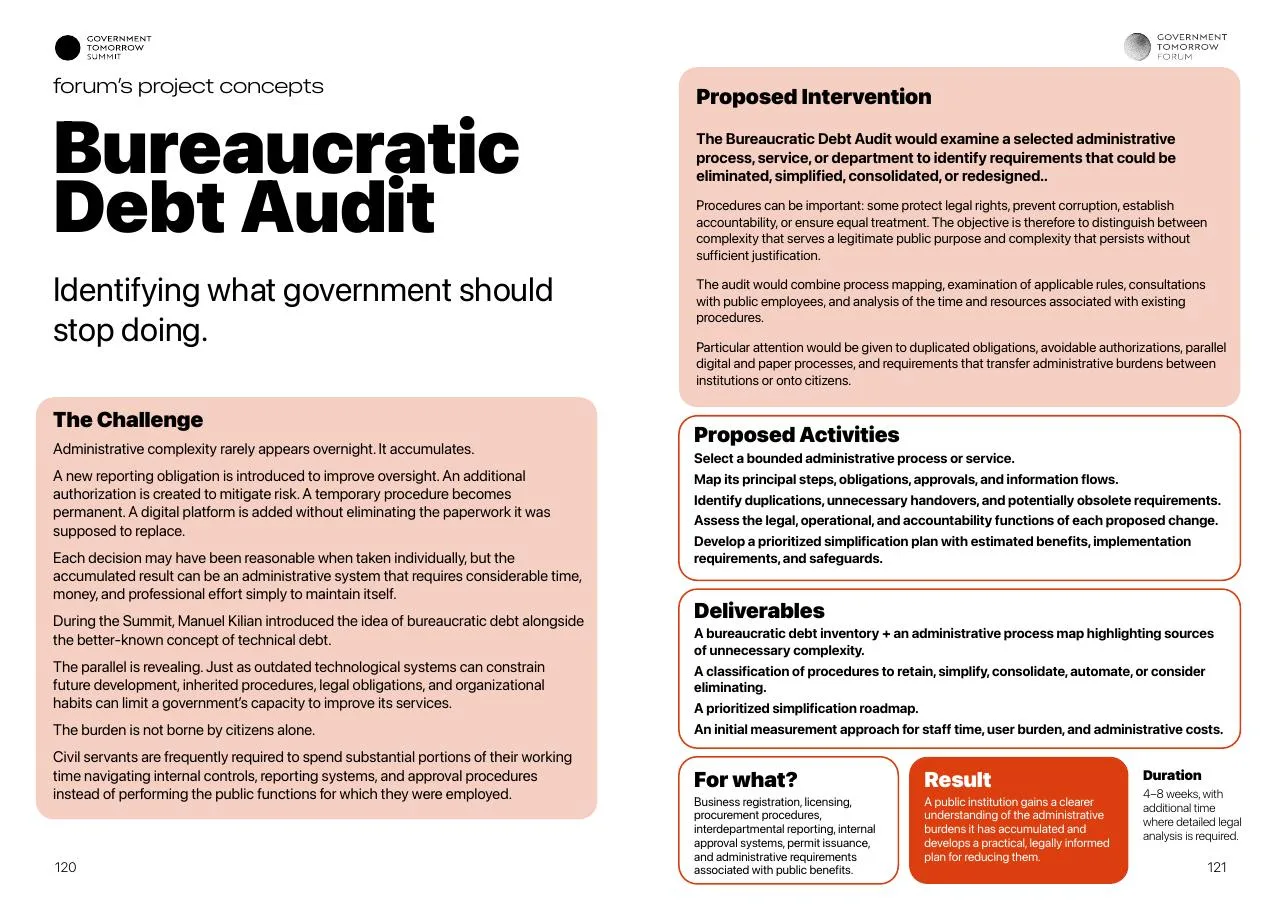
- Bureaucratic Debt Audit: examine accumulated administrative burdens and develop a legally informed simplification plan.
- Government Learning Protocol: review past or ongoing initiatives, preserve lessons and build an early-warning and follow-up process.
For public leaders and transformation teams
For ministers, senior officials, digital-service teams and researchers who need to turn reform ambitions into institutional capability—not simply another strategy or technology project.
Explore GTF Pathways · Discover Governance Lab Geneva · Government Tomorrow Summit
Summary of the supplied 64-page paper from the October 2026 Berlin Summit. The original cover labels the publication 2027. Editorial team: Igor Lys, Paakhi Rajpal, Kartik Kapai, Archie Hood, Jake Kitchiner and Philip Borg.
Pages from the paper
Continue reading
 Publication
GTF Pathways: Public Service Evaluation System
Measuring what governments do for citizens: three Pathways, nine indicators, a Five-Point Test and one Service Passport report.
Geneva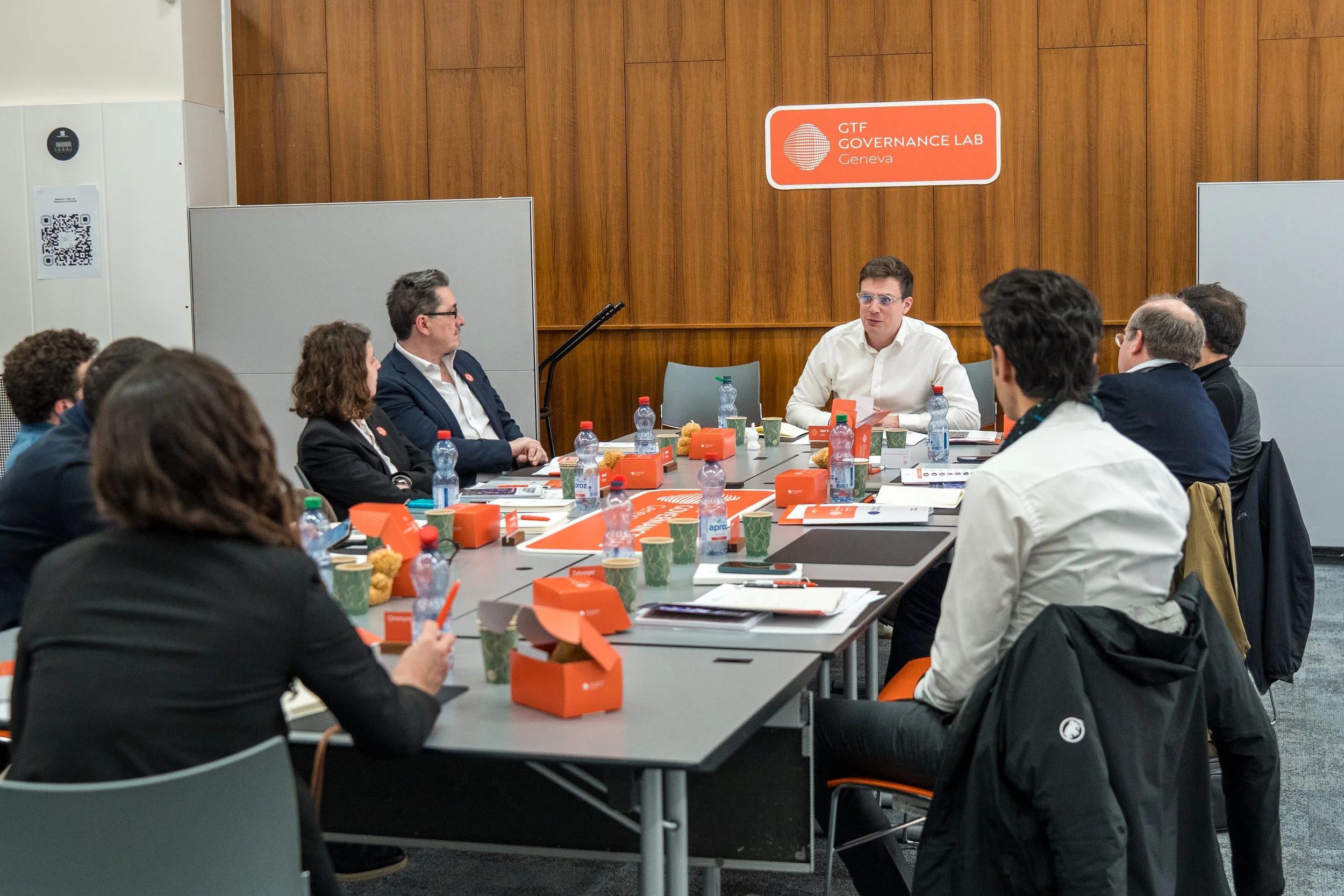 Lab
GTF Governance Lab Geneva
A multi-step in-depth process focused on producing useful and usable knowledge for public sector leaders.
Geneva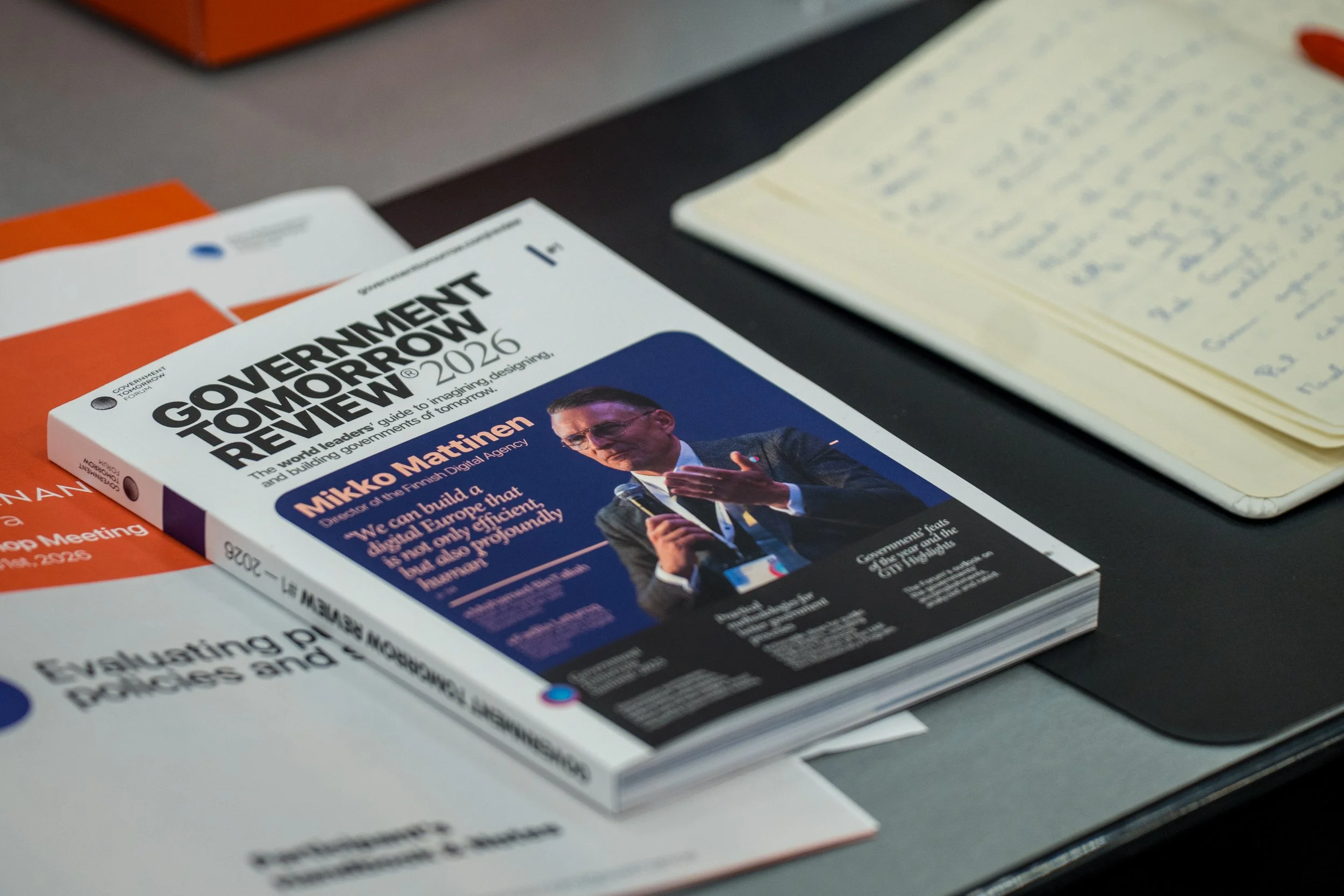 Publication
Government Tomorrow Review
The Forum’s flagship journal — interviews, essays and research from the GTF community.