
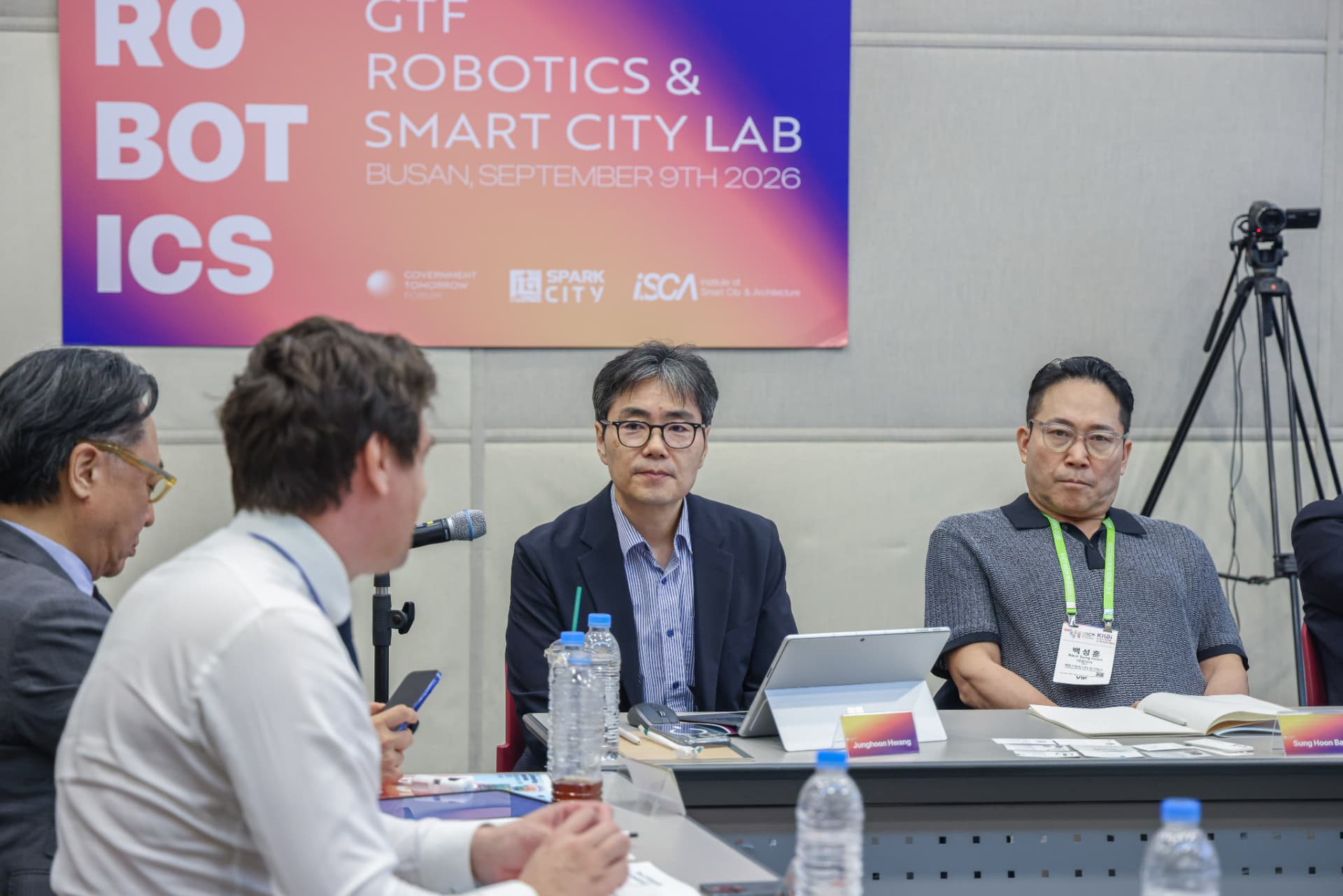

GTF Robotics Lab South Korea
Governing the Physical AI Transition — GTF’s research platform on Intelligent Cities, Robotics and the Physical AI Transition. From South Korea to the world.
First meeting: September 9th, 2026. World Smart City Expo. Busan, South Korea.
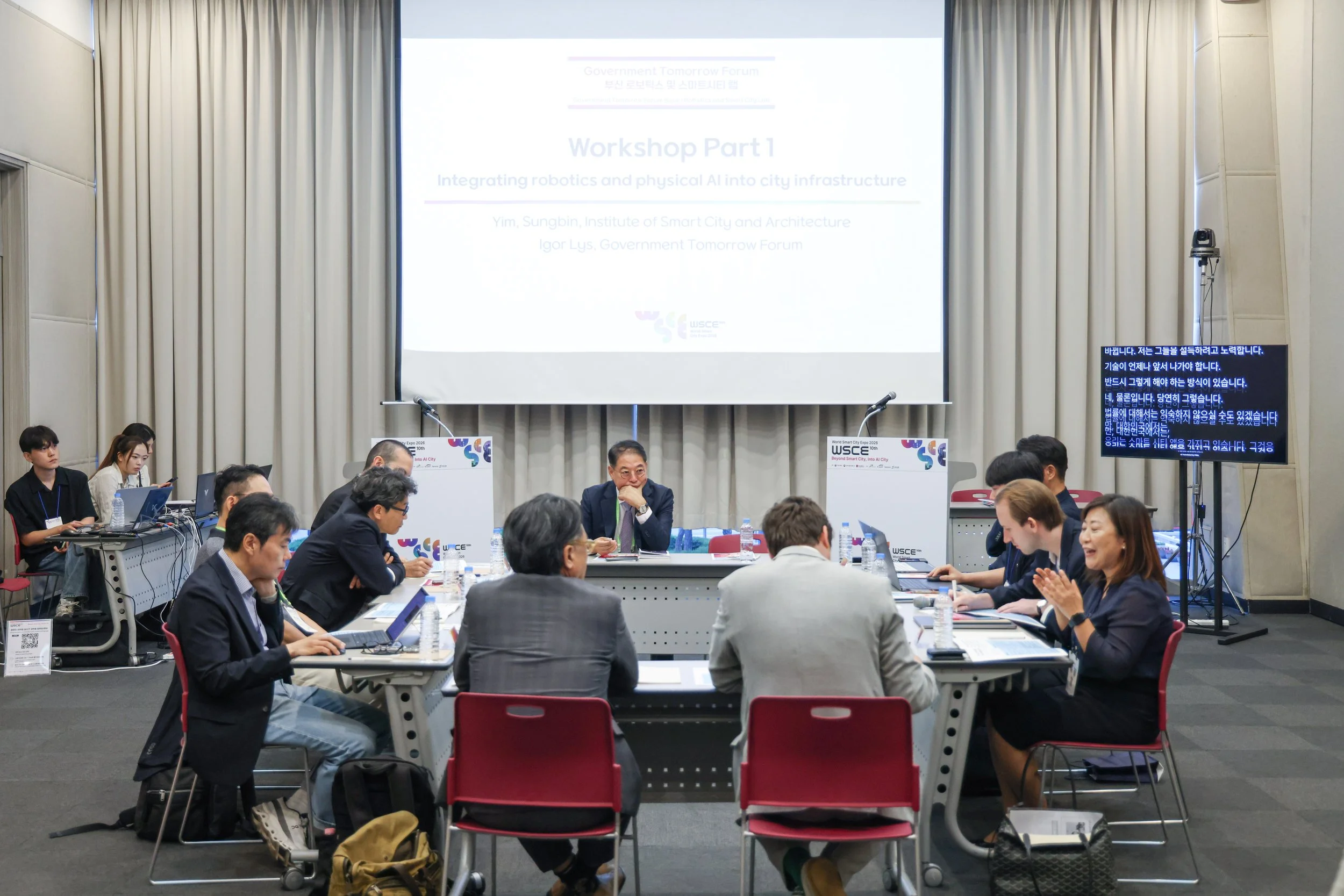
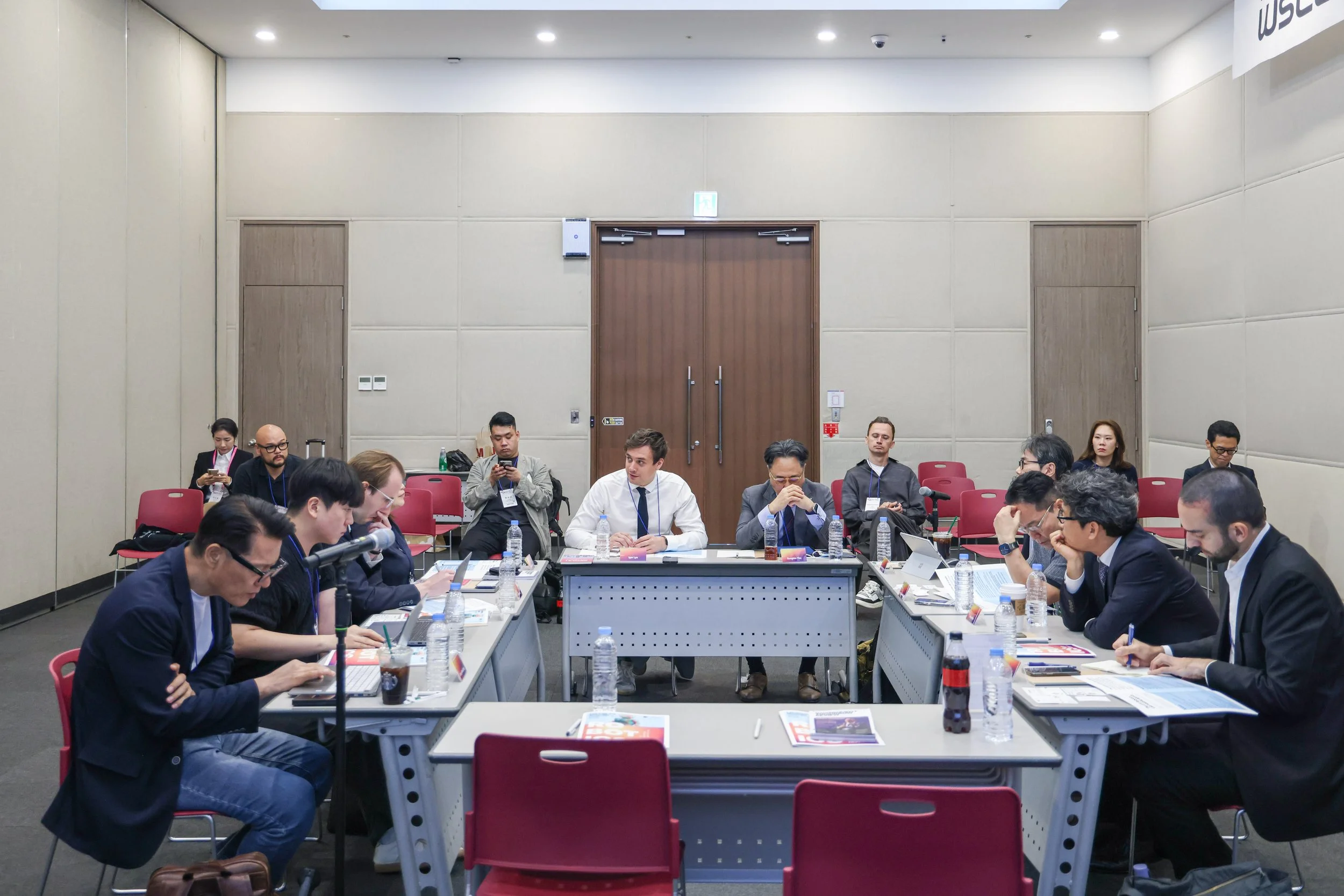
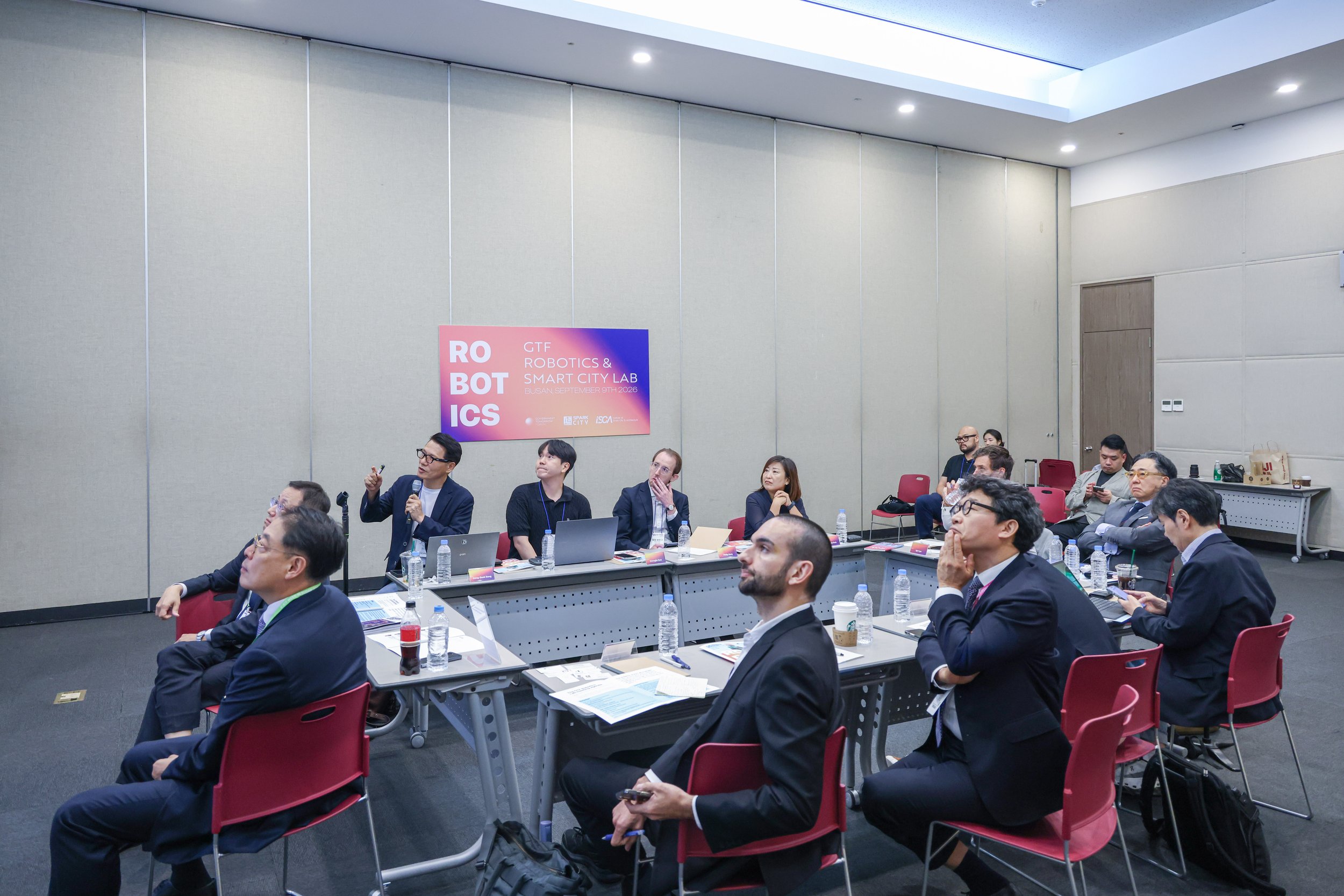
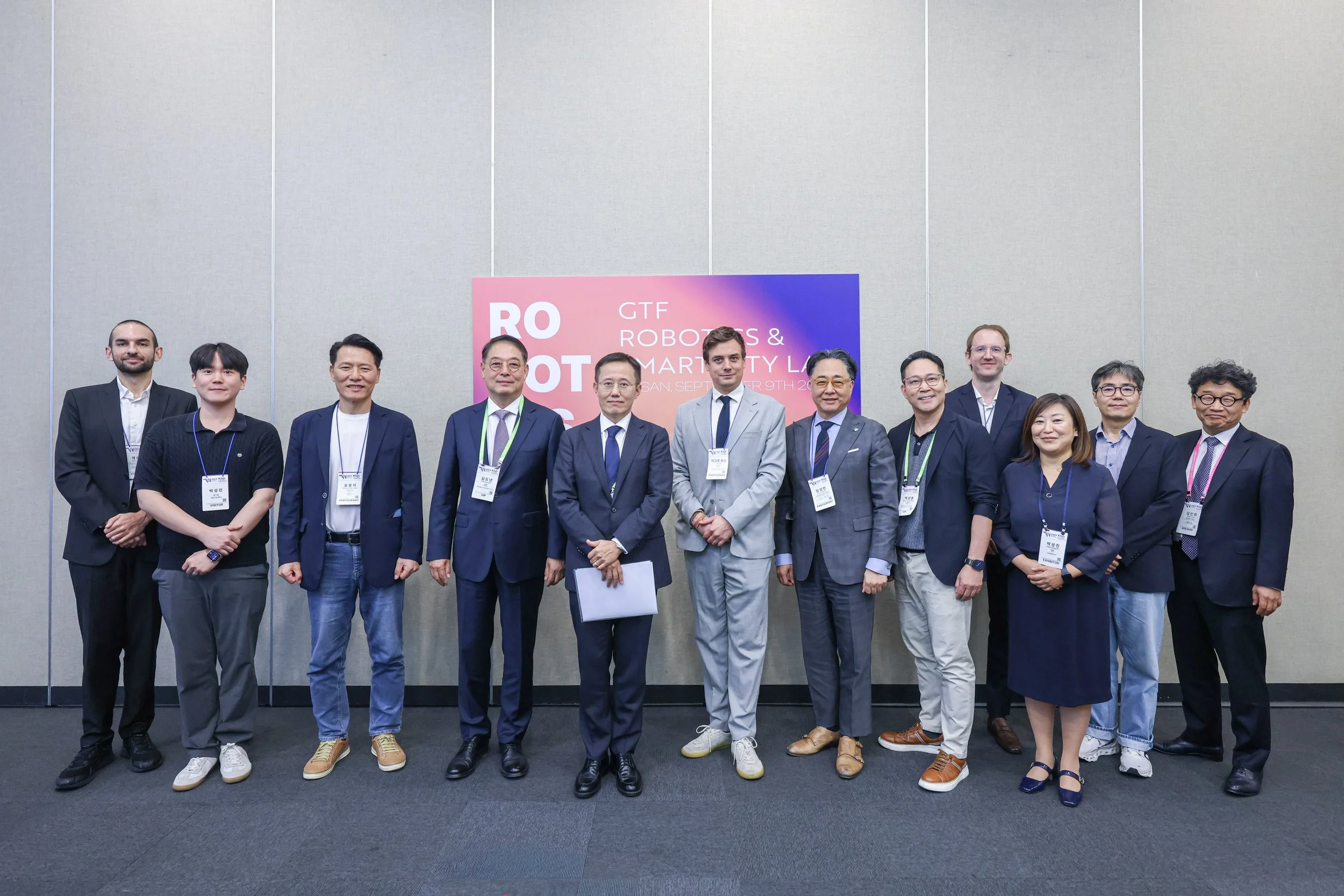
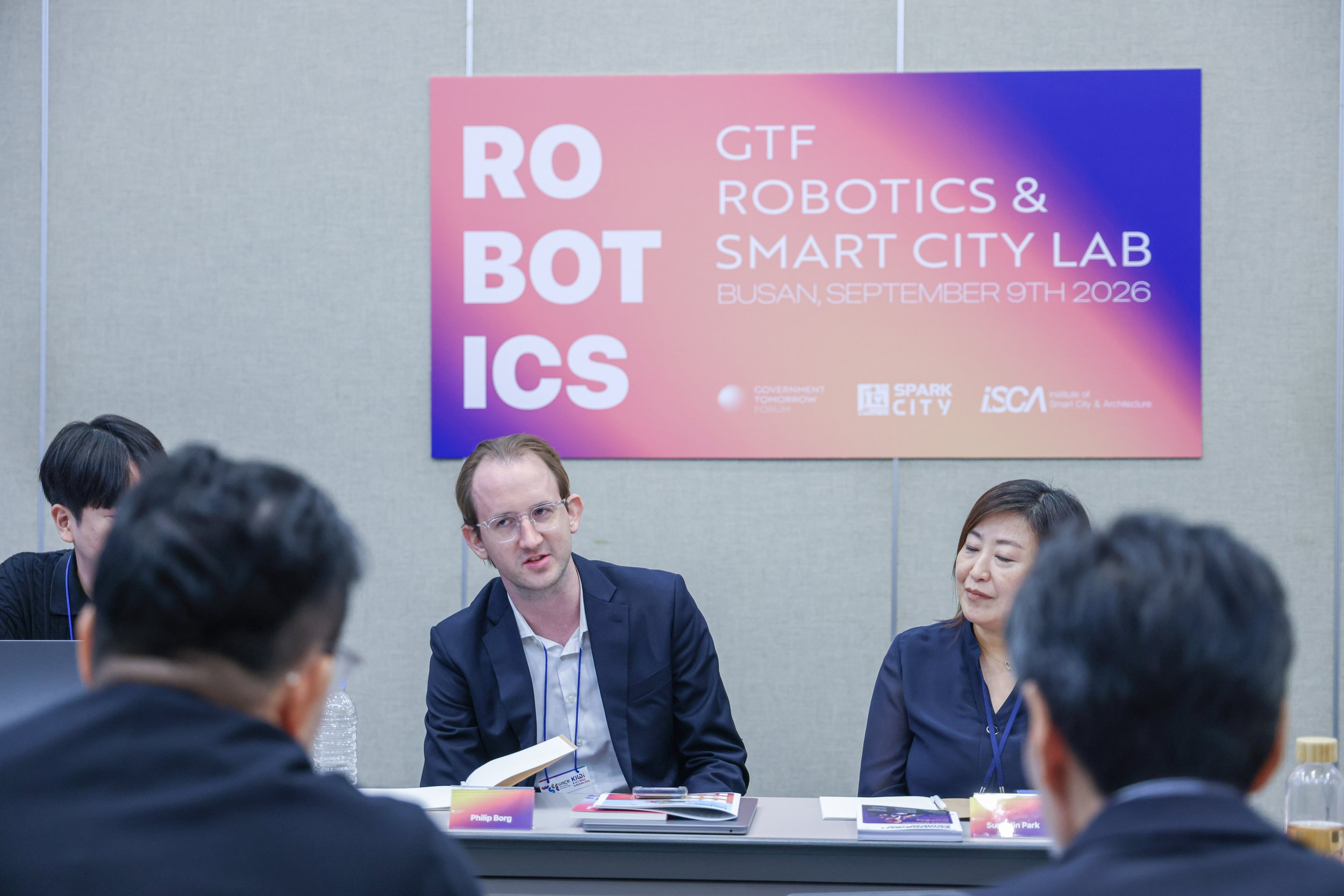
The first edition of the GTF Robotics Lab took place in South Korea during the World Smart City Expo. Participants included robotics and smart-city specialists, urban planners, representatives of Korean institutions, international experts and practitioners involved in projects such as Sejong Smart City and Seoul’s emerging Physical AI ecosystem.
Rather than asking only what robots will be capable of, the discussion focused on a harder question:
What needs to change in government and in cities before robots can become a normal, useful and trusted part of everyday life?
Artificial intelligence is leaving the screen.
Robots, autonomous vehicles, intelligent logistics systems, and other forms of physical AI are beginning to reshape how cities function, how services are delivered, and how people interact with technology in everyday life.
The Lab explores one central question: how can governments make cities ready for physical AI — culturally, institutionally, spatially, and regulatorily — while ensuring that robotics expands human capability rather than simply technological complexity?
The first meeting’s key takeaways
Kindness Towards New Things
Technological adoption depends not only on infrastructure or regulation, but on whether societies are culturally prepared to accept novelty.
The Neighborhood as the Scale of Physical AI
Many of the most meaningful robotics applications may emerge at neighborhood level, where technology directly affects mobility, logistics, care and everyday services.
Robots as Infrastructure for People
The strongest applications of physical AI may not be those that imitate humans, but those that expand human autonomy, capability and time.
The AI City Needs a Conductor
Urban planners, technologists, regulators and public-service leaders increasingly need an integrating function capable of connecting separate institutional worlds.
Urban Planning as an Innovation Tool
Planning can create predictable environments where robotics and intelligent systems can be tested, financed and deployed.
A Demo Is Not a Deployment
Real deployment requires infrastructure, regulation, business models, operational data and public acceptance.
Research agenda
- how governments can build societal readiness for physical AI;
- what institutional capabilities are required to govern robotics;
- how cities should design robot-ready neighborhoods;
- how regulatory sandboxes can become mechanisms for continuous learning;
- how to move from robotics pilots to scalable urban services;
- how robots, autonomous vehicles, digital twins and city systems may converge by 2030;
- which elements of Korea’s experience can be adapted internationally.
Gallery
Continue reading
 Publication
Technology & Procurement — Summit Paper
The State is not an app: agentic AI, intelligent public buying and seven pilot blueprints for meaningful digital transformation.
Berlin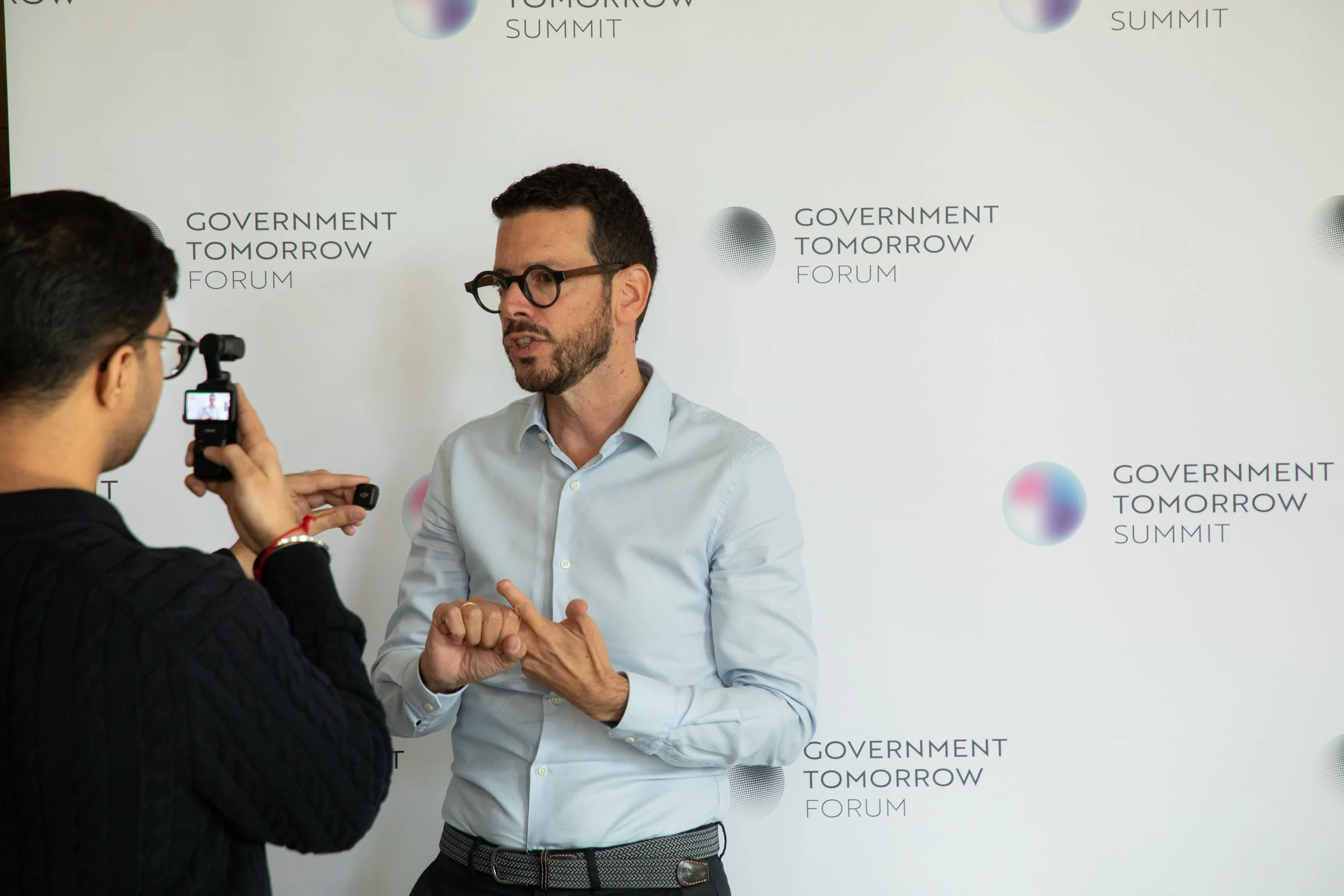 Insight
Hey, Government! workshop put agentic government’s political problem at the center
At the Government Tomorrow Summit in Berlin, a workshop anchored by a successful tech demonstration moved quickly beyond AI’s technical promise to the harder questions of trust, process reform, public procurement and political will — in preparation of the GTF Summit Paper on tech & procurement.
 Publication
“Hey, Government”: the Agentic State Backbone
Summit paper on tech & procurement for the agentic state.
Berlin